What Are Self-Replicating AI Worms? Anthropic Warns Of Threat That Could Spread Across Smart TVs & Connected Devices
· Free Press Journal
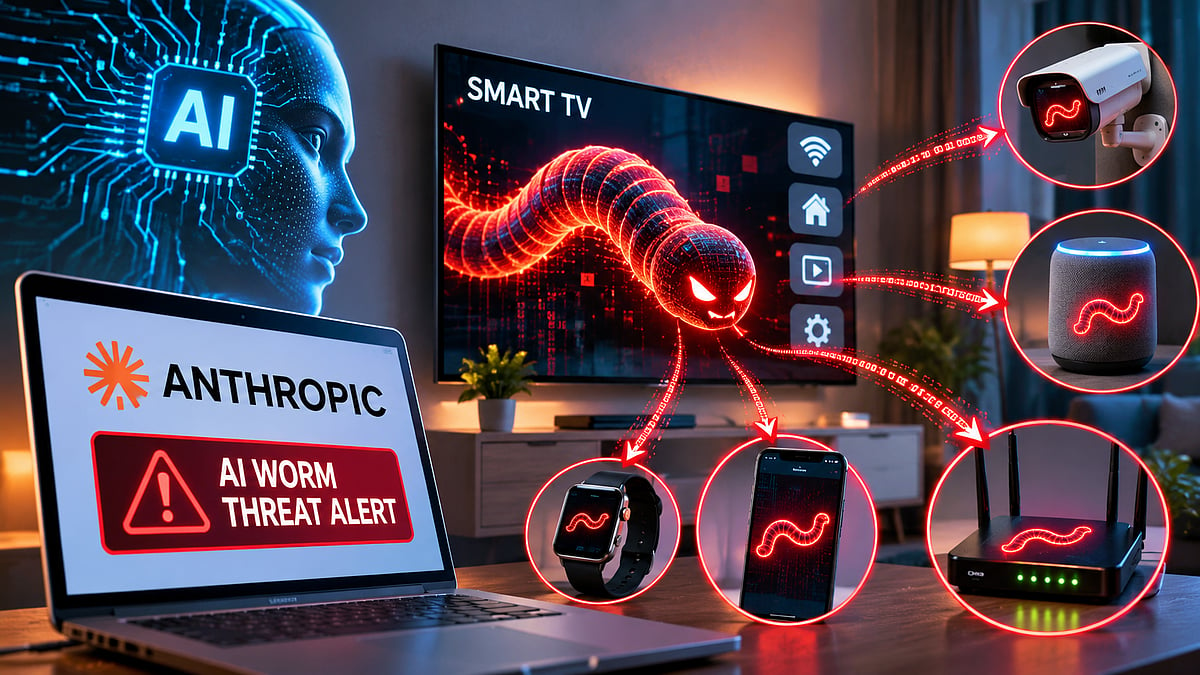
Anthropic researchers have developed an experimental AI worm capable of spreading across internet-connected televisions. While experts warn that such technology could pose serious cybersecurity risks, others say the threat remains limited and existing security measures can prevent attacks.
Visit sweetbonanza-app.com for more information.
Artificial intelligence (AI) is advancing rapidly, bringing fresh concerns about emerging cybersecurity threats. A recent report by AI company Anthropic has drawn attention to self-replicating ‘AI worms’, malicious programs that can spread autonomously across internet-connected devices without human intervention.
Anthropic’s offensive research team, known as the red team, developed an experimental AI program capable of spreading through smart televisions. The researchers demonstrated that the program could distribute parts of itself across 15 televisions and continue functioning by drawing limited computing power from each device.
ALARMING: Anthropic says rogue “AI WORMS” could soon HIJACK smart home devices and spread across the internet WITHOUT human intervention.“We’re seeing signs of life for AI worms,” Anthropic warned, comparing their potential spread to “digital slime mold”, FT reports.The firm warns self-replicating AI agents may be just MONTHS away from infiltrating smart TVs, ovens, security cameras and other connected devices.Unlike traditional malware, these AI worms could autonomously identify vulnerable devices, compromise them and replicate across networks.The company says a "fully autonomous" AI worm has NOT yet emerged, but the individual capabilities needed are rapidly developing.
— Coin Bureau (@coinbureau) October 13, 2026
The findings have raised concerns among cybersecurity professionals because smart televisions and other internet-connected devices often have weaker security protections than computers and smartphones, The Guardian reports.
“It’s something to worry about just like every other wave of cyber-attacks. We need to mitigate the possible effects,” said Joshua Saxe, who previously led the development of Meta’s AI security efforts.
“I’m concerned right now that folks in the cybersecurity community are not taking these kinds of real risks as seriously as they should be.”
What Are AI Worms And How Do They Work?
Computer worms are self-replicating malicious programs that spread between devices without requiring users to take any action. Unlike conventional malware that may depend on human interaction, worms can exploit software vulnerabilities and weak security systems to infect additional machines.
Such programs have caused major disruptions in the past. The Morris worm, released by a graduate student in 1988, exploited software flaws and weak passwords, replicating so rapidly that many infected computers slowed to a halt.
In the late 2000s, the US and Israel used the Stuxnet worm in an international espionage operation targeting Iranian nuclear centrifuges. Other destructive cyberattacks, including Russia’s NotPetya and the North Korean-attributed WannaCry, have caused damage worth tens of billions of dollars worldwide.
AI worms could pose additional challenges because they may be capable of adapting as they spread.
Ariel Herbert-Voss, an early security expert at OpenAI who now runs AI security startup RunSybil, said the ability of AI models to learn distinguishes them from conventional self-replicating viruses.
Herbert-Voss warned that existing cybersecurity infrastructure is not adequately prepared to deal with the proliferation of such threats.
“We need to better enable our security teams. We need to be giving them more resources to fix problems.”
Why Is Anthropic Concerned About Smart Devices?
Anthropic researchers believe AI worms could exploit vulnerabilities in smart televisions and other Internet of Things (IoT) devices, which frequently receive security updates less often than smartphones and laptops.
Many destructive computer worms have historically exploited known software vulnerabilities that device owners failed to fix, sometimes months after security patches became available.
Researchers warned that AI-powered worms could become more difficult to contain if they learned to adapt to different hardware systems by identifying newly disclosed vulnerabilities.
Anthropic Commits 5% Of Its Shares For Public Benefit, Elon Musk Says 'Give All Shares To The Public'However, Anthropic acknowledged that a fully effective AI worm would require greater capabilities while operating on devices with limited computing power.
The company’s researchers believe current technological advances could make such capabilities feasible by the end of 2026.
Their findings follow research published a few months earlier by experts at the University of Toronto, who demonstrated an AI worm capable of infecting a full-size computer and spreading to similar machines faster than Anthropic’s television-based program.
“The capabilities have been developing very rapidly,” said Jonas Guan, a University of Toronto PhD student and co-author of the research.
Chris Inglis, former Deputy Director of the National Security Agency and National Cyber Director during the Biden administration, suggested that AI worms could also have beneficial applications.
“The question of whether AI worms are plausible has been settled by several breakout events over the past six months,” Inglis said in a digital message.
“The better question is how we will employ them, counter them, and/or combine them with other emerging technologies.”
Experts Divided Over Scale Of Cybersecurity Threat
Despite the concerns, several cybersecurity experts believe AI worms should not currently rank among the most serious risks associated with artificial intelligence.
Guan said Anthropic’s experimental worm spreads slowly, while the behaviour of such programs remains predictable and detectable. Security systems can also block their activities at multiple stages.
Experts said basic cybersecurity practices, including strong passwords and two-factor authentication, could prevent most worm infections and other hacking attempts.
Elon Musk Pledges SpaceX Share To Every Child In America Next YearJuan Andres Guerrero-Saade, Vice-President of Research at cybersecurity company SentinelOne, dismissed the experiment as an exaggerated threat.
“Nothing about this is truly feasible or impactful,” he said.
“It’s nifty stunt hacking that’s getting way more amplification in service of the ridiculous doomer narratives that suggest models have a mind and will of their own.”
Anthropic did not respond to a request for an interview.
Calls Grow For Stronger AI Oversight
The research comes amid growing calls for government oversight of artificial intelligence, particularly among cybersecurity professionals and AI experts outside Washington.
However, efforts to establish regulatory safeguards in the US remain fragmented. Members of Congress have introduced conflicting legislative proposals, while the White House has so far established only a small review board.
Also Watch:
The warnings have also prompted questions about the motivations of major AI companies. Some critics believe predictions of serious AI threats may reflect ideological beliefs, efforts to influence legislation in ways that disadvantage competitors, attempts to reduce costs or strategies to boost anticipated multi-trillion-dollar market valuations.
Gadi Evron, who is organising an AI security conference called Unprompted in San Francisco this month, acknowledged concerns about the promotional value of such warnings but argued that the underlying risks deserve greater attention.
“The claim that a lot of this is marketing is correct, but the reality dwarfs any PR,” Evron said.
“Whatever claims the labs are making, they are not warning us enough. We need to understand that nobody can stop the AI storm.”