Family Separation Drama Fjord Is a Haunting Depiction of Unchecked State Power
· Reason
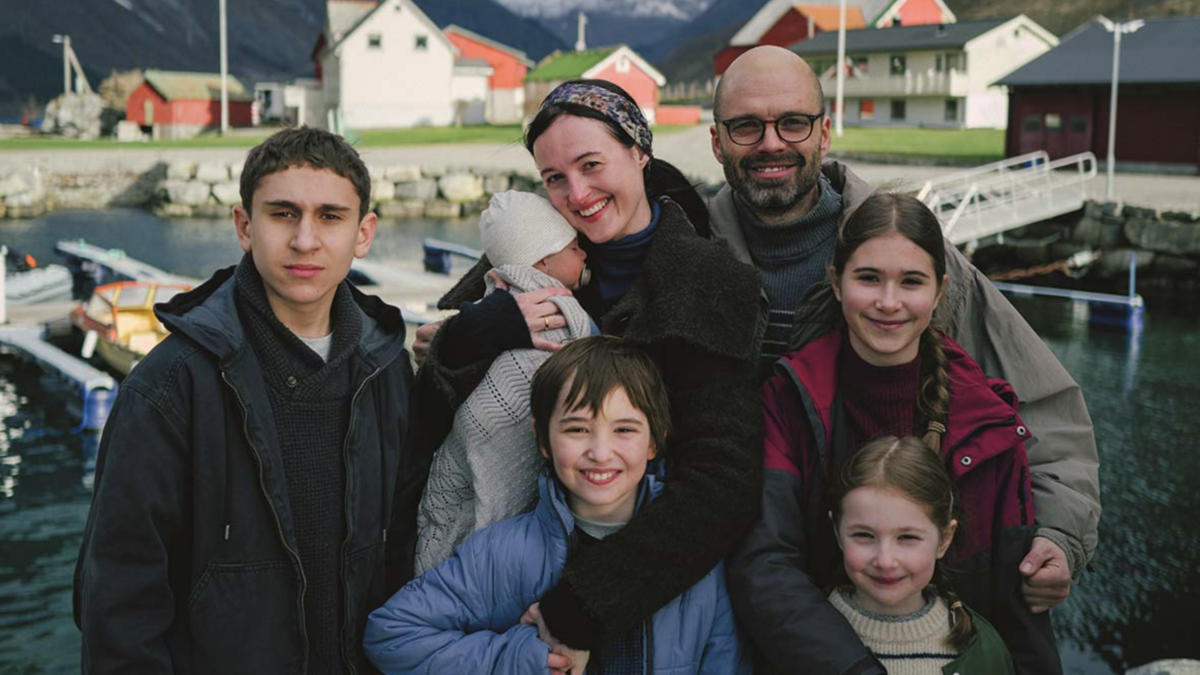
Fjord is a movie about having your children taken by the state. The tone is calm, clinical, measured, and by the books. No violence is depicted on screen. People rarely even raise their voices. Everything unfolds in the distant and impersonal style of bureaucratic procedure.
But the movie, which won the Palme d'Or at this year's Cannes Film Festival, is utterly enraging, a fierce, ferocious, gut-punch of a film. It's a haunting portrait of the consequences of unchecked state power, especially the kind that purports to be for one's own good.
Visit sport-tr.bet for more information.
Much of the film's power comes from the fact that it simply depicts what happens when a person, or a family, comes under suspicion by the state. There's no commentary, no lecturing, no big speech at the end. Instead, writer-director Cristian Mungiu, a Romanian filmmaker whose sympathies are clearly with the family, simply shows us, unblinking, what it's like to lose one's rights and freedoms at the hands of a bureaucracy that respects no power and no authority but its own.
When the film begins, the Gheorghiu family—a mother (Renate Reinsve), father (Sebastian Stan), and their five children—moves from Romania to a small town in Norway. Soon, school authorities notice the children have bruises. We in the audience know the bruises weren't caused by the parents, but the children, who don't speak Norwegian, give conflicting statements. After being brought in for questioning by the police, the father admits to sometimes spanking or lightly slapping his children on the behind, for correction. In order to go free, he's required to sign a statement that contorts his words, making his admission of spanking sound like something more sinister and violent.
He's also a conservative Christian, which has caused some social tension: He's played Christian music, without singing the lyrics, on a piano at school, a no-no in a state that strictly curbs proselytizing. School officials are concerned that he requires his children to pray and study the Bible; the children aren't allowed to play video games or watch YouTube. One of his children spoke out against homosexuality in school during a session on gender. There's suspicion among the teachers and administrators that he might be indoctrinating his kids.
So the school authorities alert Child Protection, Norway's powerful family bureaucracy. They remove the kids, including a breastfeeding baby, from their parents' custody and place them in three separate foster homes. At first the parents are allowed no visitation, and they are not told where the children are located.
Then they go to court, initially for a civil trial, but with a criminal trial for child abuse looming in the background. As the legal process proceeds, they are told repeatedly that essentially anything they do to fight for their children will make the outcome worse. The state wants compliance and admission that they wrongly abused their kids. But if they admit to abusing their kids, doesn't that give the state evidence they are unfit to parent? Doesn't that make the criminal trial more likely to go against them? As their own, mostly sympathetic lawyer, informs the two parents, "Frankly unless you convince them that you understand and regret it, the risk of you going to prison is considerable."
Later, at the trial, a representative from Child Protection calmly says there's no reason to believe children might be better off with their biological parents, noting the family's restrictions on video games, internet, and YouTube. In their view, the state knows what's best for the kids; the culturally backward, religious conservative parents do not. It's not for nothing that one character, a conservative political figure from Romania who has come to help publicize the situation, analogizes the power of Child Protection to the power of the Soviet state.
Part of what makes Fjord so effective is its lack of sermonizing. You don't have to be a trad, a conservative, a family values evangelical, to see that what's happening to the Gheorghiu family is simply wrong. They are railroaded by an imperious bureaucratic state that distorts reality to turn them into villains, with the goal of separating children from their parents and each other. Who are the real child abusers here?
The story is fictionalized, but not hypothetical. Fjord is based on the true story of the Bodnariu family, conservative Romanian immigrants whose five children were taken from them by the Norwegian state in the 2010s on similarly flimsy justifications. The family eventually left Norway. After watching Fjord, it isn't hard to see why.
The post Family Separation Drama Fjord Is a Haunting Depiction of Unchecked State Power appeared first on Reason Magazine.