Trump Doubles Down With Miller
· The Atlantic
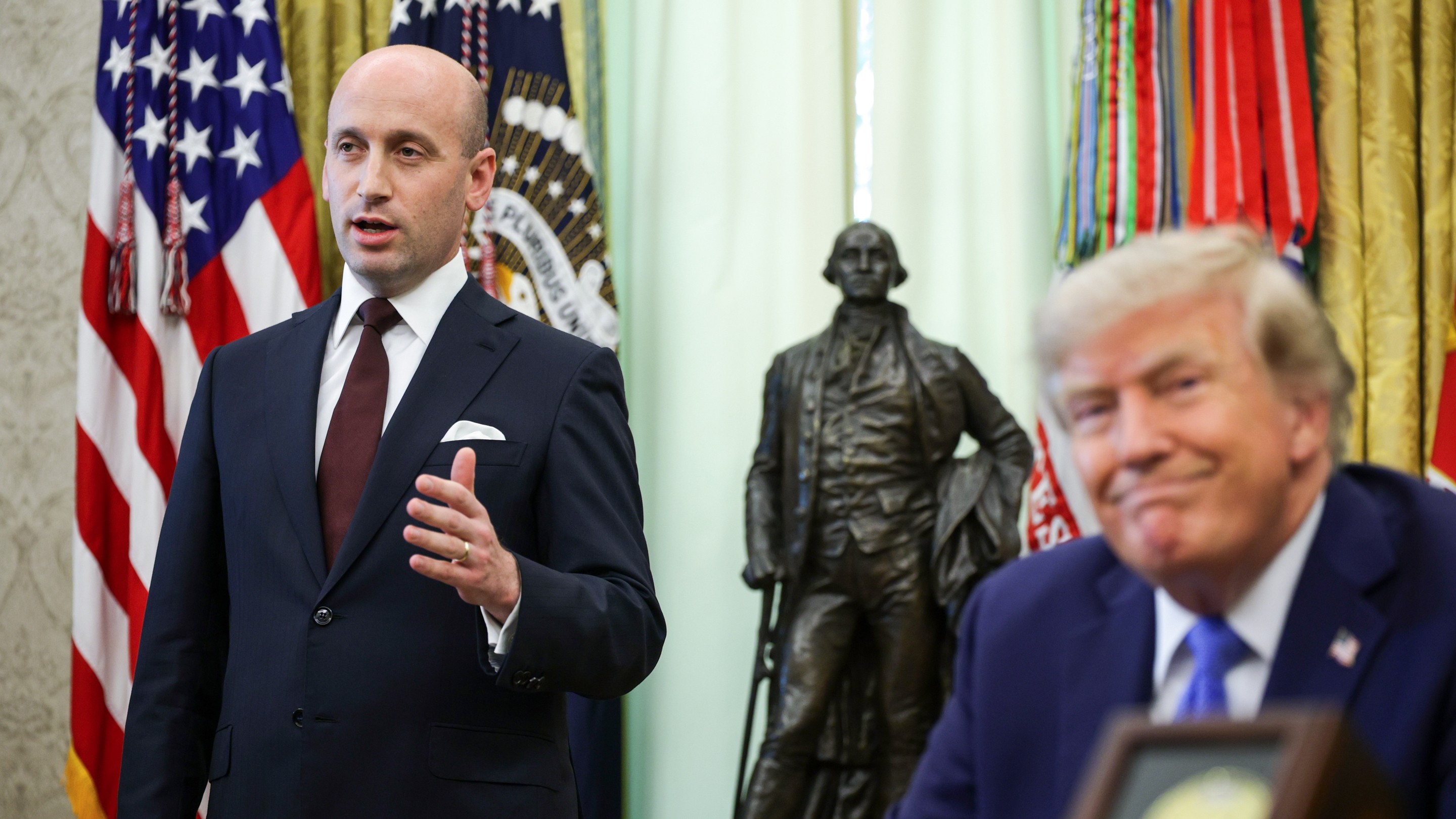
Introspection has never been one of Donald Trump’s more notable attributes. He never accepts blame or course-corrects; he only becomes a more distilled version of himself.
And so, faced with rejection at the ballot box on an overwhelming scale, the president responded by replacing his chief of staff, Susie Wiles, with Stephen Miller.
Visit bettingx.bond for more information.
Technically speaking, Miller had been Wiles’s second in command, as deputy chief of staff. In reality, Miller was already the administration’s most powerful figure, arguably including Trump himself. Steve Bannon, a former Trump adviser and a Miller ally who was briefly cast as the power behind the throne during Trump’s first term, described Miller earlier this year as Trump’s “prime minister.” In a parliamentary system, the president or monarch is merely the symbolic head of state, whereas the prime minister is the head of government.
Wiles, though reputed for her professionalism and competence, held her job for nearly two years by facilitating Trump’s impulses without questioning them. Miller, however, has driven and shaped those impulses.
He is fanatically post-liberal. Miller has repeatedly described the opposition as illegitimate. “The Democrat Party is not a political party,” he said last year. “It is a domestic extremist organization.” He has obsessively, and effectively, employed executive actions to circumvent Congress as a lawmaking body. Trump had little use for the legislature even when his allies controlled it. If Miller remains true to form, he will extend his reliance on executive action, and commit the administration to total defiance of any oversight.
He is especially driven by his belief that immigration is a plot directed by left-wing elites to destroy traditional America. Miller, more than any other single factor, explains Trump’s baffling choice to blow up his 2024 coalition, which registered shocking gains among Latinos. He has directed the administration’s frantic campaign of mass deportation, acting in the belief that the GOP has four years to permanently reshape American demography or face permanent extinction. Miller, more than any other person, is responsible for unleashing violent havoc on American streets, as masked agents in unmarked vehicles have swept up suspects. He has also virtually shut down legal immigration—except for white South Africans, whom the administration has ostentatiously welcomed. Even Trump, according to The Wall Street Journal, has sometimes complained that Miller’s immigration enforcement has gone too far.
Miller’s enforcement regimen is obviously not the sole cause of Trump’s unpopularity. Trump’s tariffs, corruption, cuts to health care, obsession with erecting monuments to or renaming them for himself, and the war with Iran all contributed to the disintegration of his coalition. When J. D. Vance laid all of the blame on the war, absolving every other failure, it sent a signal that the administration would tolerate criticism only in this one, single realm.
The signal sent by Miller’s elevation takes that message to the next step. Miller pitched himself to Trump as an advocate of winding down the war with Iran, The New York Times’ Maggie Haberman reported. His elevation thus combines retreat on a single front—a front many Trump devotees regard as a betrayal of his “America First” principles—with a determination to advance on every other.
Trump dwells in a zero-sum world, divided between winners and losers. His instinct in a moment of defeat is to empower an aide who he himself recognizes has at times gone too far. But Trump cannot admit he has failed, or bring himself to show any weakness. Better to go too far than not far enough.