What's happening to Toronto's November weather?
· Toronto Sun
See more Toronto Sun on Google — save as a Preferred Source
Remember when November meant digging out the winter coat and wondering when the first big snowfall would hit?
Visit saltysenoritaaz.com for more information.
These days, a mild afternoon can quickly give way to glove weather. Some years, winter seems reluctant to show up. Other times, it arrives with a vengeance.
So, is November in Toronto still the November we remember? Not quite. And the numbers back that up.
Toronto’s autumns and winters are getting warmer, snowfall is declining and snow is sticking around for shorter periods. But that doesn’t mean we’re saying goodbye to snowstorms or freezing temperatures.
“Fall and winter in Toronto have become warmer since the mid-20th century,” says Alex Cannon, senior research scientist with Environment and Climate Change Canada’s Extremes and Climate Applications Research division.
Data from Toronto Pearson Airport show average fall temperatures climbed from 9.4C between 1961 and 1990 to 10.7C between 1991 and 2020. The most recent decade averaged 11.6C.
Winter temperatures have also climbed, from -5.3 C to -3.4 C over those same 30-year periods. The most recent decade averaged -2C.
It’s not just about the thermometer
Snow cover across southern Ontario has shortened by approximately one to four weeks over the past four decades. Annual snowfall totals and the number of days with snowfall have also declined at most stations across southern Canada.
In other words, the white stuff isn’t sticking around like it used to.
“Toronto’s fall and winter seasons are becoming warmer, snow cover is becoming less persistent, and the potential for more rainfall is increasing,” Cannon says.
But warmer doesn’t necessarily mean more comfortable.
More winter precipitation is expected to fall as rain rather than snow, while temperature swings can create messy freeze-thaw conditions, bringing slippery sidewalks, icy roads and localized flooding.
James Nowlan, the City of Toronto’s executive director of Environment, Climate & Forestry, says the city’s climate is becoming “warmer, wetter and more variable.”
There are fewer extremely cold days, less snow overall and more precipitation falling as rain. Heavy rainfall and freezing rain events are also becoming more common.
What’s driving the longer-term warming trend?
So why does Toronto’s weather sometimes feel like it can’t make up its mind?
Natural weather patterns still play a role. Shifts in the jet stream can send warm air north or bring Arctic air south, creating sharp temperature changes. Lake Ontario also moderates temperatures near the shoreline in fall and early winter by holding on to summer heat.
But Cannon cautions against assuming every sudden weather swing is evidence of increasingly erratic conditions.
Canada’s Changing Climate Report 2026 found no “robust evidence that the jet stream has become more variable or wavier.” Day-to-day temperature variability has generally decreased during the cool season at larger geographic scales.
Human-caused climate change , however, is driving the longer-term warming trend.
And this November could still throw a few surprises our way.
The Weather Network’s November outlook calls for warmer-than-normal temperatures across much of Canada. But forecasters are also watching an unusually early breakdown of the polar vortex that could allow bitterly cold Arctic air to move south.
Where that cold air will head remains uncertain. A mild November doesn’t guarantee an easy ride into winter.
Misconception about changing winters
Looking 20 to 30 years ahead, Cannon expects continued warming, shorter snow seasons and more winter precipitation falling as rain. But cold spells, snowstorms and occasional severe winters aren’t going anywhere.
“Toronto will continue to experience cold spells, snowstorms and occasional severe winters, but against the backdrop of a progressively warmer climate,” he says.
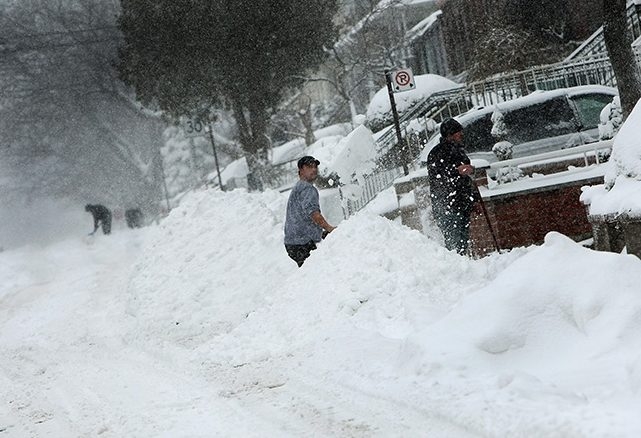
That’s the biggest misconception about changing winters. Climate change doesn’t mean Toronto will never again have a brutal January or a snow-covered December. It means the conditions between those extremes are changing.
The City’s climate risk assessment identifies heavy rainfall and extreme heat as growing concerns, while warning that winter temperature fluctuations and disruptive weather can still affect infrastructure and daily life. Toronto has identified more than 80 initiatives contributing to climate resilience.
For residents, that could mean less reliable snow cover, more winter rain and the occasional icy mess when temperatures bounce above and below freezing.