Exclusive: Publisher Spines raises $64 million in new funding to accelerate effort to automate book publishing with AI
· Fortune
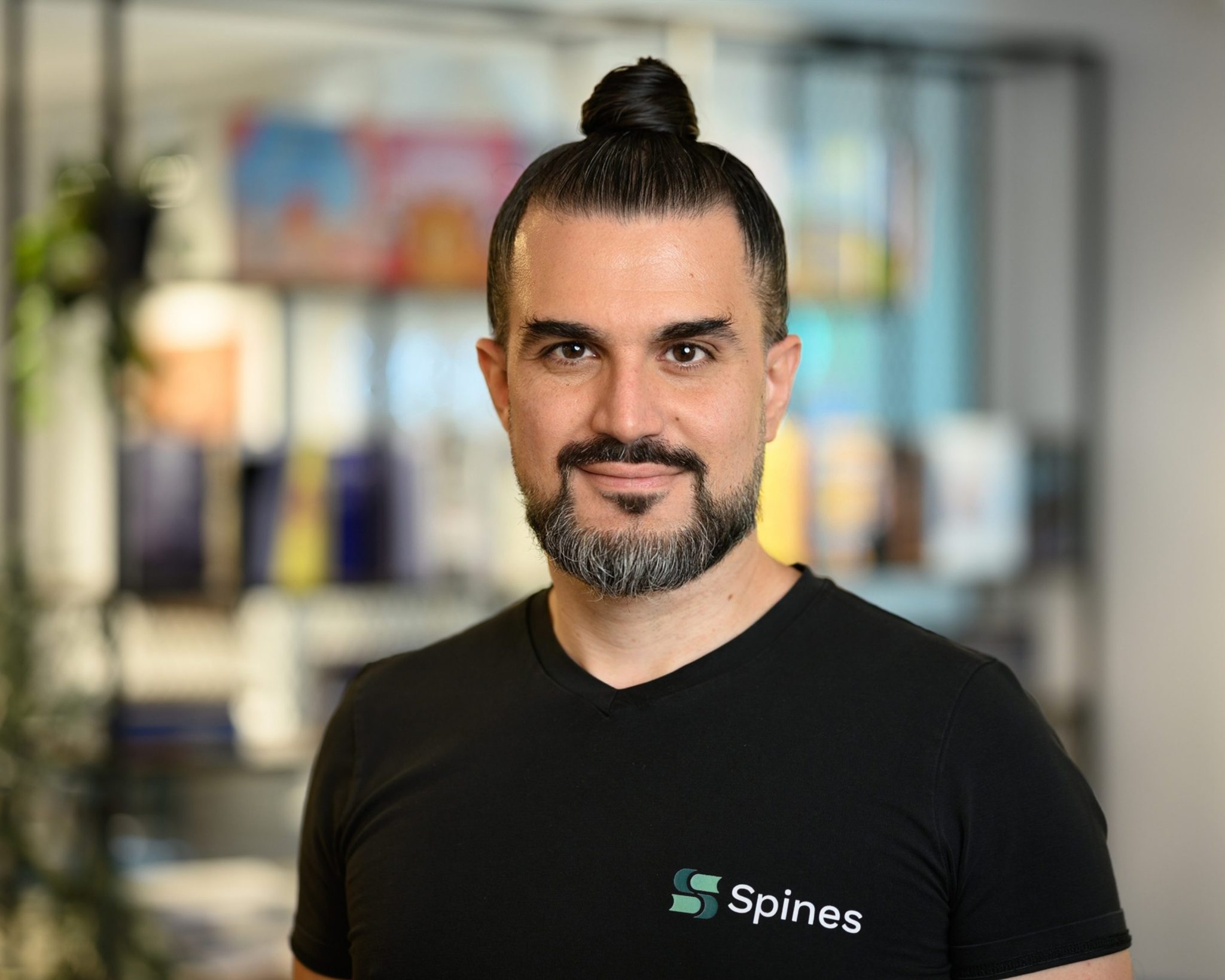
Spines, a startup that uses AI to help authors publish their books, including using AI agents to edit manuscripts, design covers, translate text, market the published book, and manage their social media campaigns, has secured $64 million in new capital, the company said Monday.
The company, which has offices in Israel and New York, is what is known as a “hybrid publisher.” Hybrid publishers largely work with authors who are unable to obtain a traditional publishing deal from a commercial publishing house or who wish to retain more control and receive a larger royalty split than an author typically would get with a traditional publishing house. As with self-publishing, authors pay hybrid publishers an upfront fee to publish their book. Hybrid publishers also take a cut of an author’s sales as royalties. But hybrid publishers provide a greater level of service and support to authors than is the case with self-publishing.
The funding package for Spines includes a $29 million Series A-1 equity round led by Zeev Ventures, with participation from Aleph, NordStar, M-Fund, LionTree, and angel investor Dan Senor. Spines is also receiving $35 million in what it calls “a non-dilutive growth financing facility” from Twelve, a credit-focused investment management firm.
The company declined to disclose its valuation after the funding.
Spines is also announcing that its new AI-powered services have helped it hit a $50 million annual revenue run rate, representing 400% year-over-year growth. The company has published more than 8,000 authors to date, accounting for some 12,000 titles, founder and CEO Yehuda Niv told Fortune. He said roughly 400 new writers sign up for Spines’ service each month.
About 15 years ago, while partway through a master’s degree in electronic engineering, Niv published a book of his own and concluded that “the publishing process is completely broken.” That bad experience motivated Niv to get into publishing himself. He bootstrapped Niv Publishing, which he says became Israel’s largest publishing house, putting out about 1,200 titles a year. Roughly six years ago, he said, he realized that AI would eventually “make every [traditional] publishing company on the planet irrelevant.”
In response, in 2021 Niv founded Spines, which describes itself as an “operating system for authors.” Writers upload a finished manuscript, and specialized agents handle editing, proofreading, formatting, cover design, metadata, ebook and print-on-demand files, and distribution to more than 100 channels, including Amazon, Barnes & Noble, and Baker & Taylor. Authors can produce an audiobook with a synthetic narrator or a clone of their own voice, and translate the book—and that audiobook—into other languages. Spines currently offers seven target languages and plans to reach 20 within six months. After publication, the platform tracks royalties and runs marketing campaigns.
Visit asg-reflektory.pl for more information.
Niv argues the agents can do some jobs better than the freelancers authors typically hire. Of the roughly 10,000 authors he published in Israel, he said, every one had the same problem: “The cover designer didn’t have time to read my book.” Spines’ cover agent reads the manuscript, researches which retail categories give the book its best shot, which designs work best in those categories, and designs the cover to match those metrics.
AI agents accelerate the time it takes to get from manuscript to having a book in stores, a process that in traditional publishing takes many months to more than a year, bringing it down to just weeks.
Spines’ publishing packages start at about $3,000 and run to $20,000 for a premium tier that publishes a book in three languages, each with an audiobook; most authors pick a mid-tier bundle costing $5,000 to $7,000, Niv said. Spines recently changed its royalty split so that authors keep 80% of net royalties, up from 70%. The company reports royalties monthly, rather than the twice-yearly or annual statements common in the industry, and is working toward weekly and eventually real-time reporting, Niv said.
Niv said that Spines only publishes books “100% written by humans” and that it uses software to try to weed out AI-generated manuscripts. “We are not here to replace [authors] with AI,” he said, insisting that Spines exists to “empower” human writers.
Still, some aspects of Spines’ use of AI may raise copyright issues, particularly around AI-designed book covers. U.S. courts and the Copyright Office have held that images made entirely by AI can’t be copyrighted. Niv said Spines licenses the image-generation tools it uses and passes a license on to authors. He argued that is often a broader license than what authors get from human illustrators, who usually keep the copyright and license the image only for the book cover.
Spines has roughly 350 employees, Niv said, adding that only about 50 work in R&D; most of the rest handle customer success and support, helping authors with decisions that he says software can’t make for them. “Our AI agent designed for you three amazing covers, but eventually you have to choose one,” he said. “For an author, that’s an emotional decision.” Spines’ human marketing experts are there to help.
For now Spines sells its platform directly to authors who don’t have a traditional publisher. But Niv said the company is in early talks with one of the Big Five U.S. publishers about a partnership in which Spines and its AI agents would be used to help run that publishing house’s services.
“Spines has all the ingredients to become the category leader in the next generation of publishing,” Oren Zeev, the founding partner of Zeev Ventures, said in a statement.
Niv said Spines will use the debt facility to fund growth and the equity to build out its product and expand beyond the U.S. into other English-speaking markets, including the U.K., Canada, and Australia. He said he is aiming for 200% to 300% annual growth. Most of the company’s staff work in Eastern Europe, the U.S., and Latin America, but R&D and management are based in Herzliya, Israel.
This story was originally featured on Fortune.com