Akshay Kumar: A Star Personal Brand Defined By Constraints And Consistency
· Free Press Journal
Last Friday at the hotel, while we were enjoying a few drinks, my friend and mentor Vermajee opened a fresh agenda. “Tell me something, Sanjeev, who do you think has one of the strongest personal brands in Bollywood and would be affected by courts asking the government to go slow on celebrity messaging and charges?”
I knew better than to answer immediately. With Vermajee, questions are often traps disguised as conversations.
Visit asg-reflektory.pl for more information.
“Amitabh Bachchan? Maybe Aamir Khan,” I tried.
He shook his head.
“Jackie Shroff? And no, not Anil Kapoor.”
He smiled. “Interesting. But no. Think personal brand-think Akshay Kumar.”
I wasn't convinced. “What has Akshay Kumar got to do with personal branding?”
“Everything,” he said. “If consistency is the foundation of a personal brand.”
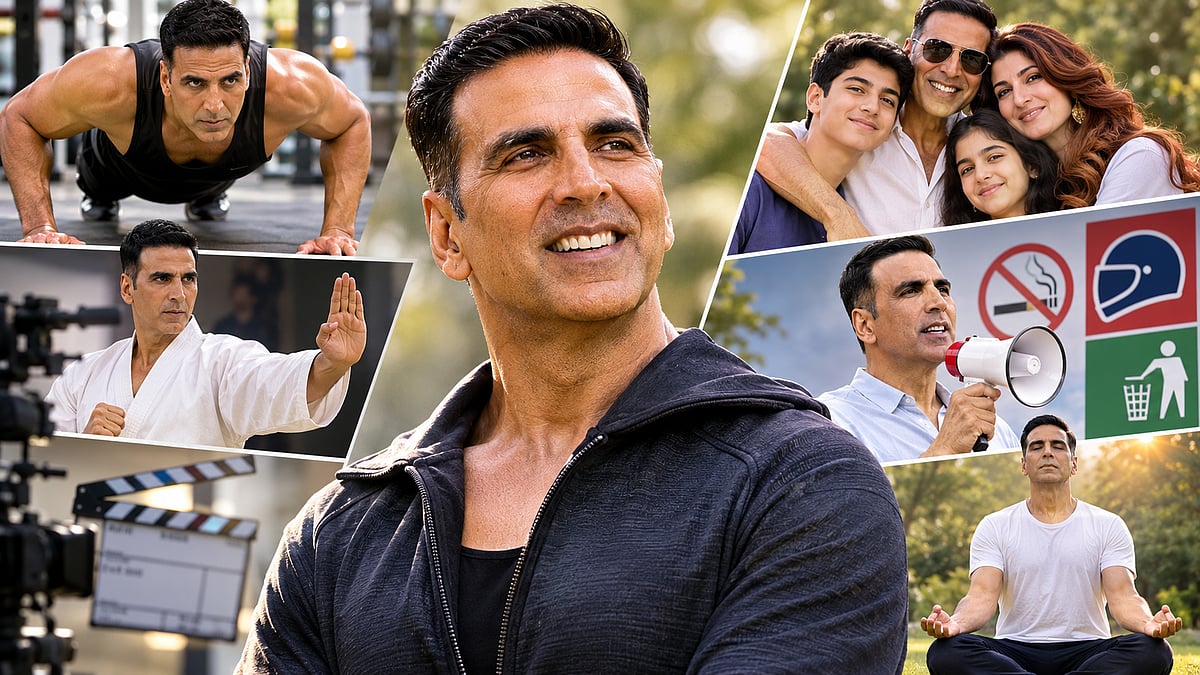
The Routine Became The Brand: Think of Akshay Kumar, and a fairly precise picture emerges. His early rising, exercise, controlled lifestyle, martial arts practice, abstinence from smoking and drinking, relentless work, and time for his family are so widely publicised that they are sometimes better known than some of his films. He has also managed an astonishing number of films and continues to release four or five films a year, which sounds more like a corporate production target than a planned strategy for box office collections.
None of these things is extraordinary by itself. Plenty of people exercise. Many don't drink. Almost everyone has families they care about. What makes Akshay unusual is that these choices have remained visible for decades across Bollywood stars and celebrities.
“But that's just lifestyle,” I said.
“Exactly,” said Vermajee. “Lifestyle repeated consistently for a long enough period and properly publicly sounded becomes positioning.”
Annoyingly, it sounded like something I could have said.
Even Sleep Has Become Positioning: His routine is so distinctive that even sleep has entered the Akshay mythology. He has spoken about early nights and protecting Sundays for his family, while night shoots have never seemed like his choice.
“Imagine explaining that to Bollywood,” I said. “Sorry, I can't attend the party. I have a bedtime barrier.”
Vermajee laughed because that is what Akshay is known to do. The joke is that even his night shots are done in the daytime. For an extended shoot at Karjat, he travelled up and down by chopper daily so he could be with the family, and his routine wouldn't be disturbed.
In an industry where midnight can sometimes be an early start, Akshay's structured life feels almost counter-cultural. There is something mildly Osho-like in the underlying idea—the conscious choice to decide how you want to live.
When The Brand Gets A Public-Service Job: Akshay has appeared in public-service campaigns around smoking, sanitation, menstrual hygiene, and road safety. His latest messaging addresses another concern: parents should notice a sudden change in a teenager's behaviour because it could indicate an underlying mental-health issue.
“I find that interesting,” I said. “Why does the same person keep becoming the face of these messages?”
“Because the messenger and the message don't fight each other,” Vermajee replied.
Fair point. Whatever the commercial arrangements behind these campaigns, Akshay's public persona makes the transition fairly natural. The fitness obsessive can talk about healthy choices; the family man can talk to parents; the action hero can tell us to wear a helmet. He has become an unusually versatile piece of public-service communication real estate. I am not sure, but maybe he is the celebrity who has done the most public service advertisements.
The Husband Brand: “Despite being known over the years as something of a flirtatious star, with several reported and rumoured relationships, he has still managed to retain the image of a committed family man.” I said.
Vermajee raised an eyebrow.
That contradiction is worth acknowledging. The Akshay story has had its share of gossip and linkups, yet the longer-running public image remains strongly connected to his wife, children, family time, and a settled domestic life.
Think about the traditional Bollywood fantasy: the hero who parties until morning, drives something expensive, and comes home whenever the script requires him to.
Akshay offers another polarised version. A man who can perform spectacular stunts, make several films a year, earn serious money, pay taxes, stay fit, and still apparently know when it is time to go home.
For many women, that may be a rather attractive proposition.
“Personal branding people will love this,” Vermajee said. “And maybe there is a case study to be featured.”
The Brand He Never Planned: That is what makes Akshay Kumar interesting. He didn't seem like the kind of person to sit down and strategise a personal brand. He made a set of choices about how he wanted to live and then stuck with them long enough for the choices to become part of his public identity.
We usually tell people to decide what they want others to remember about them. Akshay seems to have done the reverse. He lived consistently enough for other people to decide where he fit; reality, after all, is perception adulterated with reality, and branding is the synopsis.
Vermajee finished his drink, smiled, and said, “That's brand strategy.”
“No,” I said. “That's the absence of one.”
He smiled. “That is even better when it comes to personal branding.”
Sanjeev Kotnala is a brand and marketing consultant, writer, coach and mentor.