Amazon Workers Have Won a First North American Contract
· Jacobin
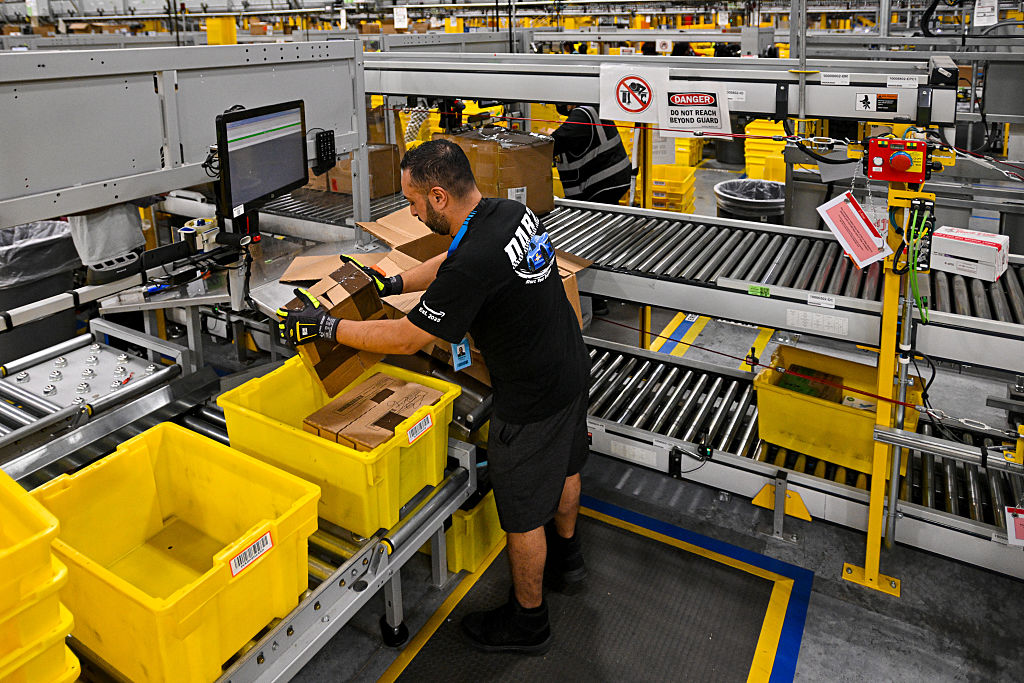
Amazon has spent years and enormous resources trying to prevent its North American workforce from unionizing. Even where workers have successfully organized, the retail giant has used everything from legal challenges to warehouse closures to frustrate their efforts to secure a first contract. Now, for the first time, workers at an Amazon facility in North America have a collective agreement.On November 13, an independent arbitrator issued a three-year contract covering approximately eight hundred workers at Amazon’s YVR2 fulfillment center in Delta, British Columbia, a suburb of Vancouver. The workers are represented by Unifor Local 114, part of Canada’s largest private sector union.The agreement represents an important breakthrough in the struggle to organize Amazon.Unlike workers at Amazon’s Staten Island warehouse in New York, who remain without a contract, workers in British Columbia benefited from provincial labor laws that provide stronger remedies against employer interference and bargaining obstruction.Yet the victory also presents a challenge. Having secured both union recognition and a first contract through labor board intervention, Unifor must now ensure the rank-and-file organization necessary to sustain its bargaining relationship with Amazon. Legal victories are essential, but they cannot substitute for organized worker power.How Amazon’s Union Busting BackfiredThe road to a first contract began with an organizing campaign launched in 2023. By May 2024, Unifor had applied to the British Columbia Labour Relations Board (BCLRB) for certification at YVR2. Amazon responded with a sophisticated anti-union campaign. According to the board’s subsequent decision, the company deployed a specialized management team, subjected employees to extensive anti-union messaging, and deliberately increased hiring to dilute union support.The board found that Amazon had hired unnecessary additional workers with the purpose and effect of undermining the union’s organizing drive. It also concluded that the company’s pervasive anti-union campaign made it impossible to reliably determine employees’ wishes through a representation vote.In July 2025, the board took the extraordinary step of granting Unifor remedial certification, recognizing the union as the workers’ bargaining representative without counting the ballots from the previously conducted vote.Under the province’s Labour Relations Code, the board can certify a union when employer misconduct has made a fair representation vote impossible. The provision recognizes that traditional remedies, such as ordering employers to cease unlawful conduct or rerunning elections, may be insufficient to reverse the effects of union busting. Remedial certification effectively prevents employers from profiting from their own illegal interference.Though Amazon’s challenge to the certification decision proved unsuccessful, its resistance did not end there.In February 2026, the BCLRB ordered Amazon to provide what is likely to be over $1 million in back pay after finding that the company had unlawfully withheld wage increases from unionized employees while granting raises at other regional facilities.Yet even after these defeats, Amazon continued resisting meaningful collective bargaining.Negotiations began in late 2025, but ten bargaining sessions and subsequent mediation failed to produce an agreement. A central obstacle was Amazon’s insistence that Unifor surrender its ability to challenge the company’s productivity expectations.According to the mediator’s findings, Amazon demanded that the union permanently waive its right to contest how quickly and intensively employees were required to work. The company indicated that it would never abandon this position. Brown concluded that the parties were unlikely to reach an agreement voluntarily and recommended binding arbitration.Here, another distinctive feature of British Columbia labor law proved decisive. Section 55 of the province’s Labour Relations Code establishes a first-contract mediation and arbitration process. Where bargaining has broken down, the board can direct the parties toward a binding resolution rather than allowing an employer to indefinitely drag out negotiations.In August, the BCLRB ordered the dispute be resolved through arbitration. Amazon challenged that decision as well, unsuccessfully seeking to halt a standard labor relations process it continues to characterize as “unfair.”The resulting collective agreement demonstrates the importance of labor laws that do more than formally recognize workers’ right to unionize. While Amazon sought to thwart workers at every turn, crucial legislative protections ensured workers a defense.A Contract That Challenges Amazon’s ControlThe agreement provides tangible improvements for workers, including wage increases bringing the top hourly rate for regular warehouse employees to approximately C$29 by 2028, additional vacation for long-serving employees, enhanced severance protections, and guarantees concerning existing benefits. It gives the union a formal role in handling grievance procedures and access to binding arbitration to resolve disputes.But the most consequential achievement may be the union’s ability to challenge Amazon’s control over the organization and pace of work.Amazon’s business model depends on intensive surveillance and algorithmic management. Workers’ movements and productivity are continuously monitored through scanners and software, while management uses this information to evaluate performance and impose discipline.At YVR2, Amazon employs a system called Structured Productivity Performance Review, which compares individual workers’ output against that of their peers. Employees falling within the bottom 5 percent of productivity can become subject to corrective measures, potentially culminating in termination.Such systems create powerful incentives for speedup. Even without fixed production quotas, workers face pressure to continually increase their output to avoid falling behind their coworkers. The resulting competition can undermine workplace solidarity and encourage unsafe working practices.Unifor sought to replace this approach with a more transparent work-measurement system incorporating ergonomic considerations, fatigue, and the physical demands of warehouse work.The arbitrator declined to impose that alternative, concluding that insufficient evidence had been presented to establish that Amazon’s existing productivity system was unsafe.Nevertheless, he also rejected Amazon’s attempt to insulate its productivity standards from union challenges.Under the agreement, Amazon must provide advance notice of material changes to its productivity, quality, and inactive-time management systems, explain those changes, and meet with union representatives upon request. Such changes must also be safe.Combined with contractual protections against unjust discipline and access to grievance arbitration, these provisions create opportunities to challenge how Amazon’s productivity expectations are applied and enforced.The union has not won collective control over production, and Amazon retains considerable managerial authority. But the company can no longer treat every aspect of its productivity regime as an exclusively managerial concern beyond scrutiny.The contract creates an enforceable mechanism through which workers can collectively contest decisions that previously confronted them as isolated individuals.For a corporation whose labor-management strategy relies heavily on individualized monitoring, automated decision-making, and direct employer–employee communication, this represents an important breach in its system of workplace control.Winning the Contract Is Only the BeginningAmazon has made clear that it does not consider the matter settled.In a November 13 statement, the company denounced the agreement as unfairly imposed, objected to mandatory union membership and dues, and complained that workers had not voted on the contract — all of course ignoring the litany of labor law violations that precipitated the “imposed” contract.Amazon also continues to pursue legal challenges, while a separate employee application to decertify the union remains unresolved.This ongoing decertification dispute raises a potential pitfall for Unifor’s victory.Because certification and the first agreement were secured through labor board orders rather than a successful representation vote followed by a negotiated contract, the union faces the additional task of demonstrating its value to workers and building durable workplace power.This in no way diminishes the legitimacy of the legal remedies; they operated to redress employer violations exactly as they should. But legal recognition alone cannot produce an active, democratic union capable of defending its members.Unifor will need to develop strong workplace leadership, recruit and train stewards, involve members in enforcing the agreement, and demonstrate that collective representation can deliver improvements in their daily working lives.The new grievance procedure will be particularly important. Challenging unjust discipline, unsafe productivity expectations, and arbitrary management decisions can help workers experience the practical benefits of union membership while building confidence in collective action.This is especially important at Amazon, where employee turnover, workplace surveillance, and sophisticated anti-union messaging present formidable organizing challenges.Unifor’s victory has created an institutional foothold inside one of the world’s most powerful corporations. Whether that foothold becomes the basis for a wider breakthrough will depend on workers’ ability to turn contractual rights into collective strength.Amazon has lost an important battle. But its war against unionization is far from over. The next task is to ensure that this first contract becomes not simply a legal victory but the foundation of a durable, militant workplace union capable of challenging Amazon’s power from below.This article originally appeared in Jacobin, a democratic socialist magazine publishing long-form essays and analysis on politics, economics, and culture. Subscribe to the print edition for $20 a year.
Visit afrikasportnews.co.za for more information.