LAU: Privatization would help Toronto’s ailing transit system
· Toronto Sun
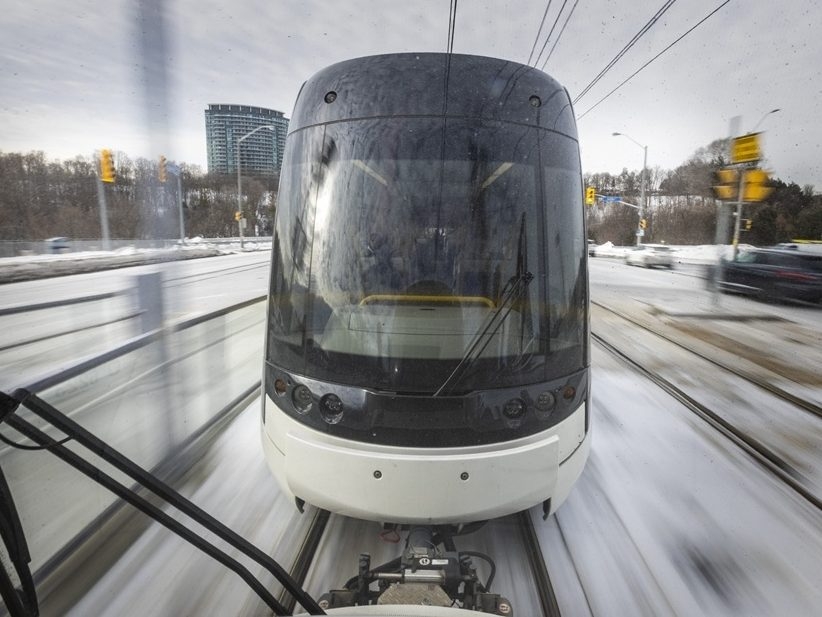
Mercifully, the long-awaited Eglinton Crosstown LRT — a much-delayed over-budget public transit boondoggle — is finally open.
Visit extract-html.com for more information.
How delayed and over budget was the Eglinton Crosstown? The transit project was originally said to cost $4.6 billion — provincial agency Metrolinx reported last fall it actually cost more than $13 billion. As for missed timelines, construction began in 2011 and the LRT was originally scheduled to open in 2020.
Considering the Canadian Pacific Railway’s expansion from Ontario to British Columbia began in 1881 and was completed in 1885, the original LRT construction timeline was not very ambitious. It was nevertheless pushed back numerous times. As recently as July 2025, Metrolinx affirmed the LRT could open in September but it took another seven months instead of two.
The opening of the Eglinton Crosstown LRT follows the Dec. 8 opening of the Finch West LRT, which was also much-delayed and over budget. The Finch West line, originally scheduled to open in 2023, cost $3.7 billion against a $2.5-billion budget, and when it finally opened in December, it proved slow and unreliable, shutting down multiple times on Boxing Day, the winter’s first snowstorm.
Commuter havoc
In addition to much-delayed over-budget projects, Toronto commuters endure subpar service from Metrolinx and the Toronto Transit Commission (TTC). On Feb. 2, a GO train derailed at Union Station, causing a week of commuter havoc (the Metrolinx CEO apologized). Meanwhile, the TTC has consistently caused commuter havoc with frequent service delays and disruptions.
According to the TTC CEO’s latest monthly report, against an on-time performance target of 90%, subways were on time 88.2% of the time, buses only 73% of the time, and streetcars only 55% of the time. Not only did on-time performance miss targets for all three modes of transportation, but for all three, on-time performance was down versus July. Ironically (or perhaps, appropriately), while published in February 2026, the monthly report actually covered monthly data from November 2025. A monthly performance report released more than two months after the actual month-end, like so many TTC streetcars, is not on time.
Commuters are fed up. The same report showed customer satisfaction at only 72% versus an 84% target, with year-to-date transit rides 5.4% below budget and down 1.1% year-over-year. And according to recent news reports, Metrolinx and the City of Toronto spent a combined $97 million on two SmartTrack stations, which may never be built.
What’s the solution to Toronto’s transit woes?
Multiple studies have pointed to privatization as a way to improve financial performance and operational efficiency, and examples of its success abound. In Hong Kong, MTR Corporation runs a profitable railway system. While majority-owned by government, it’s more like a private company than the TTC, as some of its shares are privately owned and publicly traded. A McKinsey article in 2016 reported MTR Corporation’s on-time record for Hong Kong trains was 99.9 % (compared to 55% for TTC streetcars). And transit performance significantly improved in London and Melbourne after those two huge cities handed operational control over to MTR.
To be sure, privatization is not a panacea — transit will never work perfectly. But an expanded role for the private sector — and less government control — would at least introduce more accountability and financial discipline than the status quo of unending boondoggles and underperformance by provincial and municipal government agencies.
— Matthew Lau is an adjunct scholar with the Fraser Institute.