Mumbai Water Crisis: BMC Curbs Raise Concerns Over 1.43 Lakh Housing Units Scheduled For Delivery In 2026
· Free Press Journal
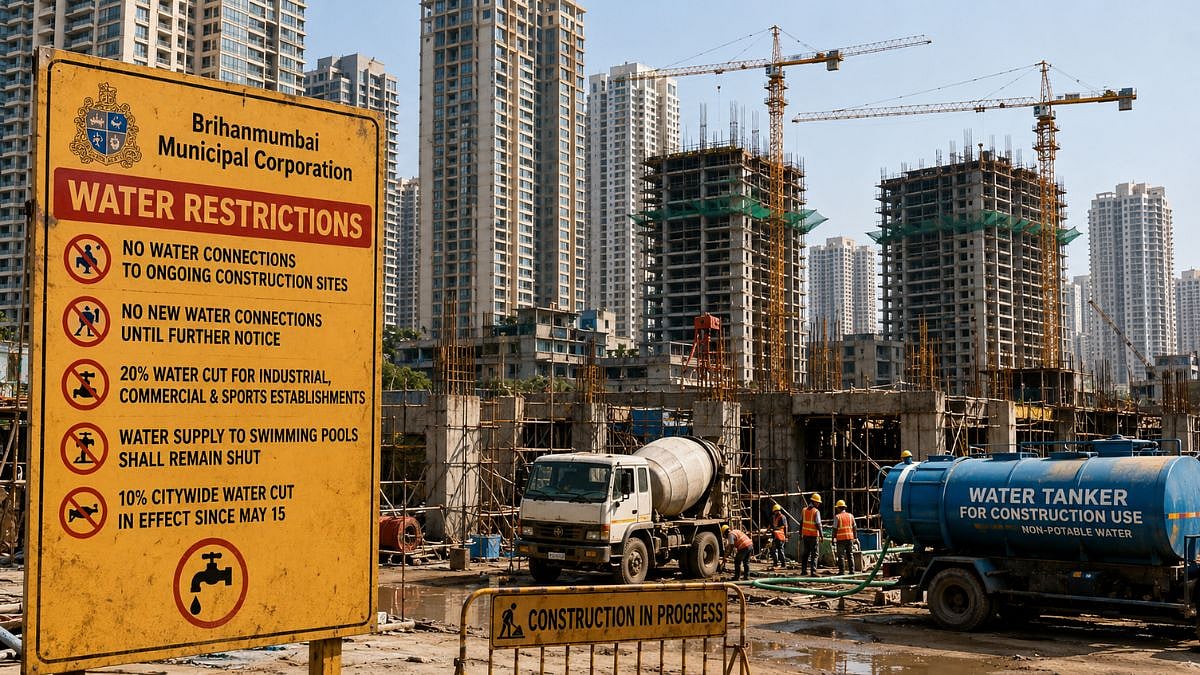
Mumbai, June 18: The Brihanmumbai Municipal Corporation's (BMC) decision to impose water restrictions across the city amid low reservoir levels has raised concerns over its potential impact on the construction sector, particularly at a time when the Mumbai Metropolitan Region (MMR) is preparing for its largest housing delivery pipeline in a decade.
Visit afnews.co.za for more information.
The restrictions, which came into effect on June 17, were announced after water stock in Mumbai's seven lakes dropped to just 10.35 per cent of total capacity. Citing a delayed monsoon, the civic body suspended all water connections to ongoing construction sites within Greater Mumbai and halted approvals for new connections until further notice.
The BMC has also imposed a 20 per cent water cut on industrial, commercial and sports establishments, shut water supply to swimming pools and continued the 10 per cent citywide water reduction that has been in place since May 15.
However, experts believe the immediate impact may remain largely confined to Mumbai city, as the BMC's jurisdiction covers only 437 sq km, while the broader MMR extends across more than 6,300 sq km and includes eight other municipal corporations such as Thane, Navi Mumbai, Kalyan-Dombivli, Mira-Bhayandar and Vasai-Virar, none of which have announced similar restrictions so far.
Mumbai accounts for majority of housing pipeline
ANAROCK Research shows that the entire MMR is scheduled to see completion of around 2.07 lakh housing units in 2026, the highest delivery pipeline in a decade. Of this, Mumbai alone accounts for a 69 per cent share, or approximately 1.43 lakh units.
“The direct construction disruption from BMC's water curbs can therefore impact various Mumbai city micro-markets — specifically the South Mumbai, BKC, Andheri, Borivali and Mulund belts,” said Dr. Prashant Thakur, Executive Director & Head - Research & Advisory, ANAROCK Group.
According to ANAROCK, around 6.86 lakh housing units are currently under construction across MMR, with Mumbai accounting for more than 75 per cent, or about 5.15 lakh units. The region is also carrying an unsold inventory of nearly 1.86 lakh units, of which Mumbai's share stands at approximately 1.40 lakh units.
Construction may continue despite restrictions
Despite the restrictions, Dr. Thakur noted that construction activity may not come to a halt immediately.
“Development progress may not stop immediately, as construction sites primarily rely on groundwater and non-potable sources for actual construction work, while BMC supplies water mainly for labour welfare and drinking on-site,” he said.
He added that the more significant concern could be delays in granting fresh water connections for new developments and the impact on labour welfare facilities, which could affect productivity at active construction sites.
“If other MMR municipal corporations face similar reservoir stress and impose copycat restrictions, the impact on the wider 2.07 lakh unit pipeline could widen considerably,” Dr. Thakur warned.
Developers seek alternative water solutions
The concern comes amid strong momentum in the housing market. MMR emerged as the country's best-performing residential market in 2025, while new launches across the top seven cities increased by 26 per cent year-on-year in the first quarter of 2026, adding pressure on developers to complete projects on schedule.
Developers fear the restrictions could impact construction schedules, increase project costs and potentially delay project deliveries if the crisis persists. Industry stakeholders are now urging authorities to facilitate alternative water sources and provide regulatory support to minimise the impact on ongoing developments.
“The BMC's water restrictions are a necessary response to the current shortage and the industry fully supports efforts to prioritise drinking water needs and promote responsible conservation. However, construction activities depend on a steady water supply, and any prolonged disruption could affect project timelines, increase costs and delay housing deliveries. While developers are increasingly using recycled water, treated wastewater and tanker supplies, these alternatives are not uniformly available across the city. The situation highlights the need for a stronger treated-water ecosystem and greater support from authorities to ensure continuity of development activities. We expect the restrictions to be reviewed once reservoir levels improve with the monsoon, as prolonged curbs could impact housing supply, infrastructure creation and employment linked to the construction sector,” said Kamlesh Thakur, President, NAREDCO Maharashtra and Co-Founder & Managing Director, Srishti Group.
Also Watch:
Mumbai Water Crisis: BMC Suspends Supply To Construction Sites, Pools As Reservoir Levels Drop To 10.35 Per Cent; Imposes Fresh CurbsWhile Amit Jain, Chairman and Managing Director, Arkade Developers, said, “For the real estate sector, the immediate impact will be a greater reliance on authorised water tankers, which could lead to higher costs and some logistical challenges at construction sites. However, we do not anticipate any significant disruption to project execution, provided alternative water sources remain accessible.”
To get details on exclusive and budget-friendly property deals in Mumbai & surrounding regions, do visit: https://budgetproperties.in/