We road test Toyota’s potent Land Cruiser 300 GR-S HEV
· Citizen
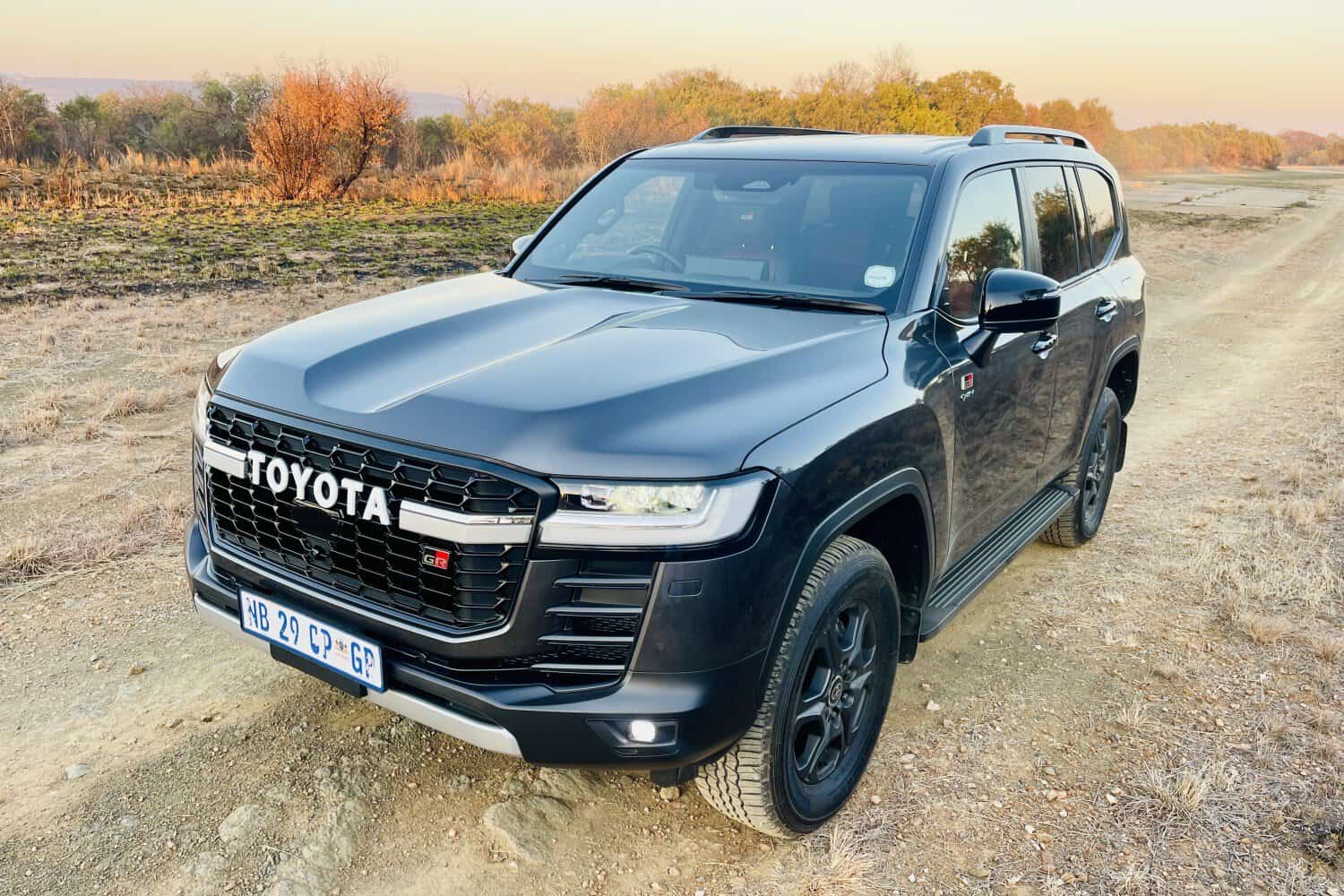
We all know the world is trying to escape its dependence on fossil fuels. But there are some real issues with trying to electrify every vehicle on the planet in a very short space of time.
Cost to build, raw material sourcing and charging infrastructure are just a few; never mind that not every motorist is looking for a transport solution that mirrors a home appliance.
Visit betsport.cv for more information.
Multi-pathway strategy
It is here that a number of motor manufacturers have got themselves into trouble and are now having to do some serious backpedalling with their over-promised commitment to pure battery electrification.
But Toyota is not one of these companies. It offers everything from “dirty” diesels to ancient entry-level petrol-burning engines and state-of-the-art turbocharged engines to mild hybrids, plug-in hybrids and full battery electric vehicles.
Despite the additional power, the HEV boasts better fuel consumption than the equivalent ICE models. Picture: Mark JonesNo. 1 in the world
The strategy is working. It is not just number 1 in South Africa by a massive margin. it is number 1 in the world.
Which brings us to the Toyota Land Cruiser 300 GR-S HEV you see here. As the badge denotes, the LC 300 is now offered with hybrid electrical assistance for the first time.
What does this mean for the consumer? In simple terms, power and torque from the standard 3.5 litre V6 twin-turbo petrol set-up comes in at 305kW and 650Nm.
Extra power and torque
Claimed fuel consumption is said to drop from 12.1 litres per 100km to 10.0 litres per 100km.
So, of course, we were eager to put this electrically enhanced LC 300 GR-S HEV through its paces. It’s what we do when new numbers are thrown around.
For speed and time testing, it was the Gerotek Test Facility as always. For everyday fuel economy, it was the usual weekly commute.
While giving customers greater choice, the new hybrid models retain the LC 300’s full-size SUV capability. Picture: Mark JonesGood test results
Strapping our Racelogic VBOX to the car, the numbers returned for LC 300 GR-S HEV came in at:
- 0-100km/h in 6.85 seconds
- 0-180km/h in 21.89 seconds
- ¼-mile at 154.40km/h
- ½-mile at 185.15km/h
- 60-140km/h in 8.88 seconds
Which are impressive in their own right for a 2 670 kg box-shaped SUV that offers permanent 4-wheel drive and chunky all-terrain tyres.
But as this is not a driving impression showing how brilliant the Toyota Land Cruiser 300 is as an all-round urban meets hardcore off-road machine.
Not as fast
We threw in the straight-line road test numbers of the straight-up LC 300 GR-S. They came in as follows:
- 0-100km/h in 6.80 seconds
- 0-180km/h in 21.16 seconds
- ¼-mile at 154.48km/h
- ½-mile at 186.91km/h
- 60-140km/h in 8.90 seconds
The eagled eyes of you out there will immediately notice that the more powerful LC 300 GR-S HEV is the fractionally slower one.
Interior trim combinations have also been refined, further enhancing the premium appeal of the cabin. Picture: Mark JonesIt is heavier
But before you attack me for not testing the cars properly or Toyota for bringing you a more powerful but slower car, it’s vitally important to note one or two things.
Toyota said it was the most powerful LC 300 yet and made no claim about it being the fastest. So, you weren’t sold a lie.
And then you have the reality of the LC 300 GR-S HEV coming in at a full 130kg heavier than the GR-S. This will make up for the tiny differences in the sprint times you are seeing.
For what it is worth, on the road in traffic not you or I am going to be able to feel 5 hundredths of a second.
Real petrol savings
But you will feel the difference at the fuel pumps. Especially as the fuel prices simply continue to climb with no end in sight.
When we had the LC 300 GR-S, we ended up using 16.2 litres per 100km for the week we spent in the car. That gave us a range of 679km from 110 litres of fuel.
In the LC 300 GR-S HEV, we used 12.8 litres per 100km over the same period. This meant we could do 781km from the smaller 100 litre tank.
The LC 300 HEV reinforces Toyota’s commitment to evolving one of the world’s most respected SUVs. Picture: Mark JonesComment
“The Land Cruiser has always represented the pinnacle of Toyota’s engineering capability, trusted by families, explorers, conservationists and businesses alike,” says Glenn Crompton, vice-president of marketing at TSAM.
“The introduction of the new HEV demonstrates that customers no longer have to choose between legendary capability and modern electrified performance. It is another important step in Toyota’s multi-pathway strategy, offering customers the right technology for their individual needs.”
Verdict
They go the same and for me, even though there is an upfront price difference of R96 400, I would still opt for the one with the battery and the savings at the fuel pumps.
Pricing
- LC 300 3.5T Petrol GR-S – R2 247 500
- LC 300 3.5T Petrol GR-S HEV – R2 343 800
The Toyota Land Cruiser 300 is backed by a three-year/100 000km warranty and a nine-services/90 000km service plan. The HEV battery is covered by an eight-year/160 000km battery warranty.