In Maine, a Toss-Up Senate Race Is About the Incumbent and Not Much Else
· Time
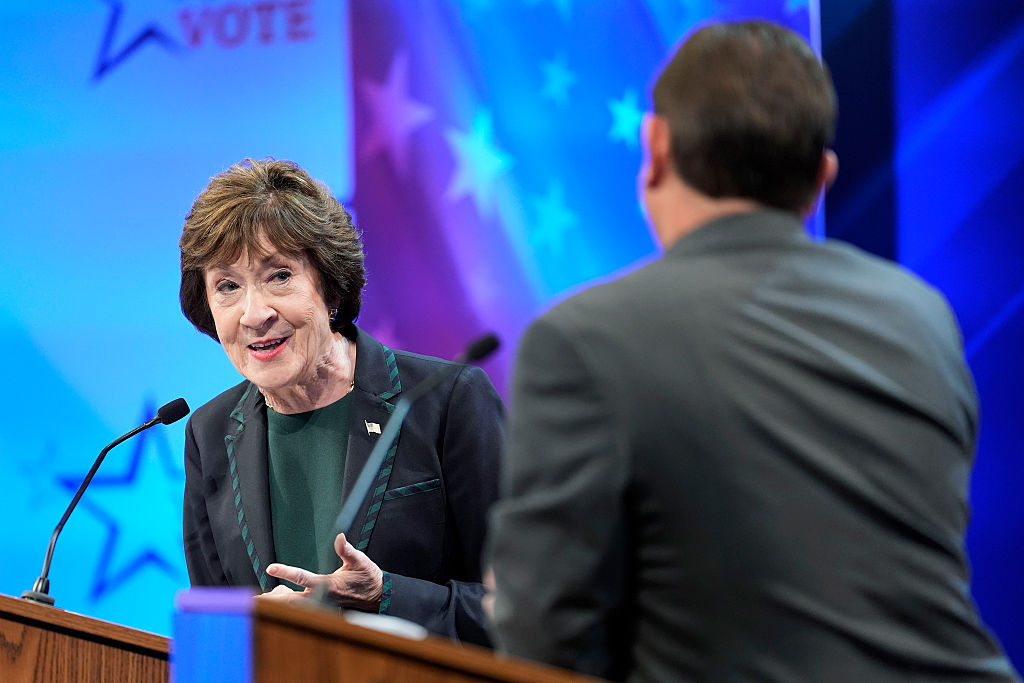
Susan Collins had just laid out her receipts.
The five-term Republican senator was standing on a debate stage in Portland earlier this month, explaining how she deserved credit for ensuring concrete and road salt were exempted from President Trump’s Canadian import levies. The move saved one small town in northern Maine $10,000, Collins said. It helped a concrete business owner avoid a $150,000 hike.
Visit chickenroad.qpon for more information.
It was an updated version of the same argument Collins has been making for decades to win re-election in a state that hasn’t backed a Republican President since George H. W. Bush.
When it was her opponent’s turn to respond, Troy Jackson shrugged. What about everything else going up in price, he asked her, before adding, “We can’t eat road salt.”
For Jackson, the comeback was a hit. It sparked “let them eat road salt” memes of Collins depicted as Marie Antoinette and assuaged some fears among Democrats about how the last-minute replacement candidate would fare in the spotlight. The viral moment also brought into focus the race’s defining issue: Collins herself. Amid a handful of Senate races that will decide which party controls the upper chamber for the last two years of the Trump era, the race in Maine has emerged as the one most decisively about voters’ view of the incumbent.
“He’s got a unique challenge because this race really isn’t about him,” says Emily Cain, a former Maine legislator and Democratic political strategist in the state. “This race is about Susan Collins and asking the people of Maine whether or not it's time for change. He just happens to be the alternative.”
Given the candidate they ended up with, some Democrats are thrilled with this dynamic. Jackson became the nominee after a tumultuous summer in which the state’s Democratic primary winner, Graham Platner, withdrew from the race int he wake of being accused of sexual assault, which Platner has denied. While Platner and Jackson have nearly identical progressive, populist policy platforms, there’s a clear contrast between them in style. Platner is a charismatic, at times gripping, campaigner. Jackson is not. His speeches tend to be more subdued and matter of fact, and he often wears an expression of utter boredom despite being at the center of one of the highest-stakes contests in the country. His affect matches his typical attire on the trail—a Red Sox cap, a fleece vest, his cell phone on a belt clip.
“Troy’s a salt of the earth guy. His biggest strength is his authenticity,” says Toby McGrath, who ran President Barack Obama’s campaign in Maine in 2008 and 2012.
With polls showing Jackson ahead but within the margin of error, both sides have sharpened their attacks. Jackson has repeatedly highlighted a recent report that the FBI and Justice Department had previously sought to open a pay-to-play bribery probe into Collins, allegations, which she denied. And a super PAC aligned with Senate Republicans released an ad calling Jackson a “freak” and a “creep” over his relationship with his second cousin, with whom he has two sons. Last week, Collins distanced herself from the ad and called for it to be taken down.
Yet it’s unclear if any of that is breaking through with voters in a race that could ultimately come down to how Collins ensures Maine isn’t forgotten by Washington. On the stump, she warns voters all that could all disappear if Jackson replaces her.
"He'll be 100 in seniority,” she told Fox News digital earlier this month, “And all of that essential federal funding targeted for the state of Maine, virtually all of it will go away."
Collins’ hold on Maine
For years, Collins has been the immovable stateswoman. She is both Maine’s longest-serving member of Congress and the longest-serving Republican woman in Senate history. Astoundingly, she’s never missed a roll-call vote since taking office in 1997.
A self-described centrist, she has cultivated a deep connection with Maine’s independent-minded electorate. In 2020, she was reelected by 9 points as Joe Biden carried the state by the same margin.
Collins, 73, has increasingly found herself on the defensive over years of controversial votes, including those confirming Trump cabinet members like Health Secretary Robert F. Kennedy Jr. She also cast decisive votes elevating Justices Neil Gorsuch and Brett Kavanaugh to the Supreme Court. Her 2018 vote on Kavanaugh, in which she said she trusted he wouldn’t endanger the right to abortion access, became a flashpoint after the court overturned Roe v. Wade in in 2022.
Most towns in Maine have felt the benefit of Collins’ role as chair of the powerful Appropriations Committee, with which she has steered funding for community centers, railroad improvement projects and shipyards. Her campaign puts the total at $1.5 billion in congressionally directed spending and targeted investments since 2021.
“Even Democrats acknowledge her work to bring funding and support back to the state is just off the charts,” says Lance Dutson, a Republican strategist in Maine. “So people are going to have to make a decision, ‘Do I hate Trump more than I appreciate and need the support Susan Collins has brought to the state over the years?’”
That argument faces more pushback this year given wider dissatisfaction with Republicans and the state of the economy. Jackson has capitalized on those economic anxieties. One of his final ads references high heating oil costs. It’s hitting airwaves just as residents fill their tanks for winter in the nation’s fourth-coldest state. He repeatedly points to Collins' votes related to the conflict in Iran for driving up fuel costs and her vote to advance the Big, Beautiful Bill, a major Republican budget and tax package, for slashing Medicaid in the state.
Last month introduced another chink in Collins’ armor, as a ProPublica investigation revealed that FBI and Justice Department agents sought to open a pay-to-play bribery probe into Collins related to allegations she’d rewarded a campaign donor with millions of dollars in federal naval defense contracts. Collins has denied the allegations, and no charges were ever filed against her or her campaign.
Several Republican and Democratic strategists told TIME they question how effective the corruption argument is landing in tight-knit Maine. “Susan goes to the grocery store, does her own shopping, doesn't live in a lavish house,” Dutson, the GOP strategist said. “People may disagree with her, but I think it’s a big stretch for almost everybody up here to get their head around her being corrupt.”
But the investigation cuts at the core of Collins’ Maine-first brand, McGrath argued, so even a small erosion of support could be the difference in a close race.
‘Troy is not a smooth talker’
Jackson, left, and Rep. Alexandria Ocasio-Cortez, a Democrat from New York, during a "Students vs. Billionaires" town hall in Portland, Maine, on Oct. 22, 2026. —Sophie Park—Bloomberg via Getty ImagesAs Jackson’s campaign keeps the spotlight on Collins, it’s kept its own candidate somewhat hidden away. Up until recently, Jackson had done very few on-camera interviews, and it was rare for him to take many unscreened questions at campaign events. Local and national campaign staff have feuded over how to showcase Jackson from the early days of the campaign, infighting detailed in an August New York magazine story.
“He has a nationalized campaign team, and these are folks who are generally only comfortable with smooth talkers, and Troy is not a smooth talker,” says a Maine Democrat who worked with Jackson in the state legislature. The Democrat, who supports Jackson, thinks there’s wisdom in trying to avoid gaffes that distract from Collins. Jackson has struggled at times to talk about foreign affairs or federal policy issues, like detailing how to pay for Medicare for All in a conversation with CNN’s Dana Bash in mid-October.
But other allies of Jackson say an overcautious campaign is impeding the Bernie Sanders progressive and stalwart labor champion from connecting with voters. “A lot of folks don’t know anything about him except that he’s a logger. He has a charming and funny side, and you don't get to see it,” says Betsy Sweet, an activist and political organizer who ran for U.S. Senate in 2020. “The D.C. folks are sure they know everything, and I feel like in so many of our national races they don’t listen to us and they screw it up.”
Jackson has a compelling working-class backstory. His mom was 16 when she had him in Aroostook County, on the rural northern tip of Maine. He grew up poor in Allagash, a frontier town near the Canadian border where he started logging at age 19, taking after his dad, his grandfather and his great-grandfather.
When Canadian loggers started crossing into Maine and taking work away from locals, he helped lead a blockade, driving his truck to the border to halt temporary workers from coming into the state. The protest made headlines but did little to change the situation, and a frustrated Jackson turned his attention to the state legislature. He first ran unsuccessfully as a Republican and eventually got elected in 2002 as an independent. He became a Democrat two years later and rose through the ranks to become Senate president.
Over decades in state politics, Jackson’s opinions on abortion and LGBTQ rights have evolved. Sweet, who lobbied for women’s groups, recalled pushing him to back abortion-rights legislation in the state. “I think it finally clicked for him after us telling him abortion is health care. It’s not whether women are gonna have one, it’s whether low-income women have the same access as rich women.”
His reputation for having a gruff demeanor, Sweet says, is accurate, but attack ads that portray him as antagonistic toward women go too far. “He will go toe to toe with you. He’s not genteel. You know where you stand with him, but you work it out.”
A shade of that temper came out in the final debate before the election. Jackson told Collins to “shut up” after she accused a protester of being one of his supporters. “It was a stupid thing for him to say,” the Democrat who worked with Jackson in the state legislature says of the debate moment. “Collins is known for her decorum, her civility. He’s courting 55- to 65-year-old women who are all about not being talked down to.”
Maine’s population is the oldest in America and the race will likely come down to older, moderate voters who have split their ticket in past elections. Collins' campaign has argued Jackson has run to the left of the electorate, drawing liberal figures like Senator Elizabeth Warren of Massachusetts, Senator Bernie Sanders of Vermont and Rep. Alexandria Ocasio-Cortez of New York to rally with him.
“That they are all campaigning in Maine for Troy Jackson tells voters exactly how he would govern,” Collins campaign spokesperson Blake Kernen said.
For all the debate about whether Jackson’s makeshift campaign has positioned him for victory, it will largely be Collins’ race to win or lose. A September CNN poll of voters backing Jackson found 29% said theirs was a vote for Jackson, while 71% said it was a vote against Collins. Her future in the Senate may not come down to Jackson at all but whether she gives voters enough confidence in what the next six years would look like.
“She’s got an amazing record in the past, but people need to hear from her what she’s gonna do in the future and what the game plan is,” Dutson, the GOP adviser, says. “They need to know, if we send Susan Collins back to Washington, how is that gonna help alleviate the anxiety this administration has been causing me right now?”