‘Cat’ Matlala’s legal team takes Madlanga’s ruling to court
· Citizen
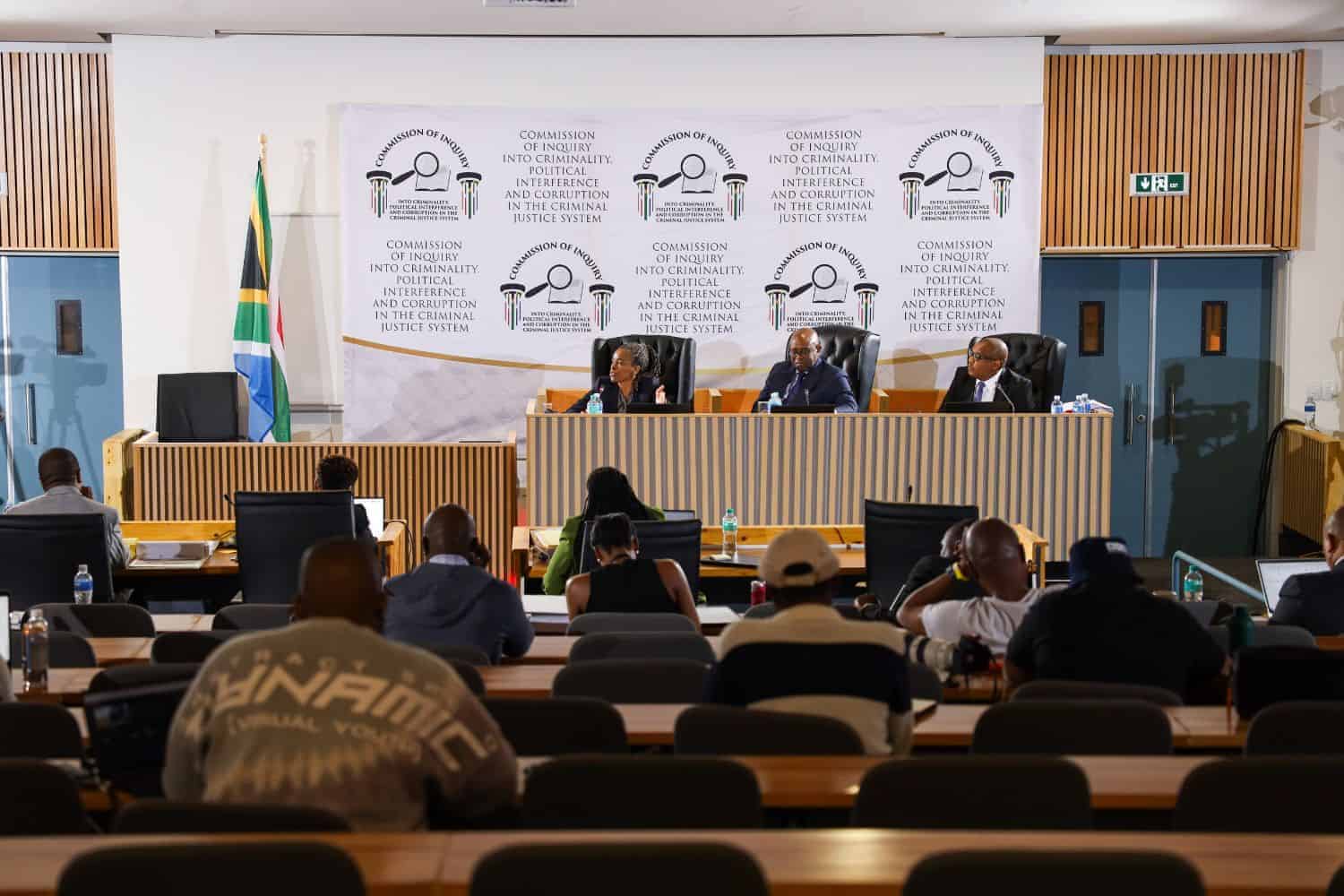
Tenderpreneur Vusimuzi ‘Cat’ Matlala’s legal representative, Advocate Annelene van den Heever, intends to approach the courts to review a ruling by Madlanga commission chairperson Justice Mbuyiseli Madlanga against her client.
On Monday, Matlala’s legal team challenged the use of his plea agreement affidavit at the commission. They argued that it would “bring the administration of justice into disrepute”.
Visit amunra-opinie.pl for more information.
In June, Matlala turned state witness after reaching a plea deal with the state, relating to a R228 million contract awarded to his company, Medicare24 Tshwane District.
Investigations found the tender irregular, with at least R50 million being paid out before it was cancelled in May 2025.
He pleaded guilty to corruption, fraud, and money-laundering charges.
In the plea deal, the state asked the court to depart from the prescribed minimum sentence, proposing 15 years’ imprisonment, with seven years suspended. This means Matlala would effectively spend eight years in prison.
In July, the Specialised Commercial Crime Court in Pretoria rejected the plea deal.
Magistrate Ignatius Du Preez noted that the crimes Matlala is accused of were driven by greed. He said he was not convinced Matlala entered into a plea deal out of genuine remorse.
Matlala’s statements ‘can’t be used’
On Monday, the commission heard that the NPA handed over Matlala’s affidavit for the hearing. The NPA further informed the commission that it had emailed Matlala’s legal team to inform them that it had handed over the documents.
However, his legal team argued that using his plea-deal admissions at the commission would violate provisions of the Criminal Procedure Act. Van den Heever further told the commission she did not receive the said communication from the NPA.
Madlanga directed the evidence leaders to submit arguments on their interpretation of section 105A(10) of the Criminal Procedure Act, which governs matters pertaining to rejected plea deals.
“It made patently clear that whatever affidavits are deposed by Mr Matlala, that is, before I was no longer involved in this case, all those documents fall part and parcel of the sentence agreement, because they needed that in order to, of course, sway Mr Matlala to enter into the sentence agreements, and at the moment that the 105A comes to nought, those agreements will all fall by the wayside,” argued Van den Heever.
“It was acknowledged by all and sundry that the affidavit and all statements and all questions put down, which I respectfully submit, were put into a document by Dylan Perumal. The agreement at all relevant times was that it goes hand in hand with the plea deal, the section 105A agreement, and if the same does not stand, everything else will fall by the wayside.”
Commission vs criminal proceedings
The commissioners and evidence, however, questioned Matlala’s legal team on the applicability of the Act on commissions.
“My question is, why is it that the nullity of the statement does not relate only to the criminal proceedings that are starting? Because the statement itself came about because of exactly what it says to, in Roman 1, negotiations which preceded the entry into that agreement,” asked Madlanga.
“Your submission is that it applies to the whole world and for any purpose whatsoever. What the chairperson, and what I’m also interested in, is where in subsection 10, because subsection 10 seems to be the only authority that tells us what should happen with a statement when there has not been an agreement. Or, in fact, when the 105A process falls apart, sub 10 tells us how to treat those negotiations; whatever record there is, it tells us that,” said Commissioner Sesi Baloyi.
“Where in section 10, subsection 10, do we find support for the broad proposition that you are making, that it holds against the whole world and for any and every purpose?
“Would your submission have been different if we had gone by way of subpoena to subpoena the NPA to give us this document?”
“You cannot hand over documents as the NPA and act ultra vires vis-à-vis your own Criminal Procedure Act. I do not believe under circumstances like that, that the NPA should hand it over,” responded Van den Heever.
‘If NPA can, why can’t commissions?’
Baloyi asked Van den Heever that if the NPA, Idac or Saps can use Matlala’s affidavit to follow leads for their own investigations, why couldn’t the commission?
Van den Heever, however, argued that the commission would not use the leads the same way investigators would. She argued that investigators do their work without involving the accused, while the commission would need to question the accused for further evidence.
“He’s an accused; he’s a suspect in matters that are related to that 204. And now you use a document that he only entered into because of the plea negotiations to ask him questions about. That can never be permitted, not even for the Commission, because you violate his rights in so many ways by allowing that, even with the greatest respect,” argued Van den Heever.
Madlanga rules on Matlala affidavit
Madlanga ruled that Matlala’s legal team failed to convince the commission that provisions of the Criminal Procedure Act apply to commissions. Matlala’s affidavit in the plea deal would be used at the commission.
Madlanga further ruled that Matlala would give evidence at the commission despite his legal team’s intention to review the initial ruling at the High Court. He said the commission would abide by the High Court’s ruling once received.
His legal team said that, if so, Matlala should give evidence in camera.